Waldorf, Maryland
Garage Door Roller Replacement in Waldorf, MD
Garage Door Roller Replacement in Waldorf, Maryland, with the published national price range up front, the full system inspected on site, and the price stated before any work begins.
Waldorf, Maryland
Garage Door Roller Replacement in Waldorf, Maryland, with the published national price range up front, the full system inspected on site, and the price stated before any work begins.
Rollers are the smallest moving parts on a garage door, and in Waldorf they are the ones homeowners hear failing first. A door that used to glide starts to rumble at the curve, then to clunk as each section passes the same spot, then to shake hard enough to rattle the track brackets. Underneath the noise, worn roller wheels are wobbling in their stems and grinding against the track, and every cycle drags a door that no longer rolls freely.
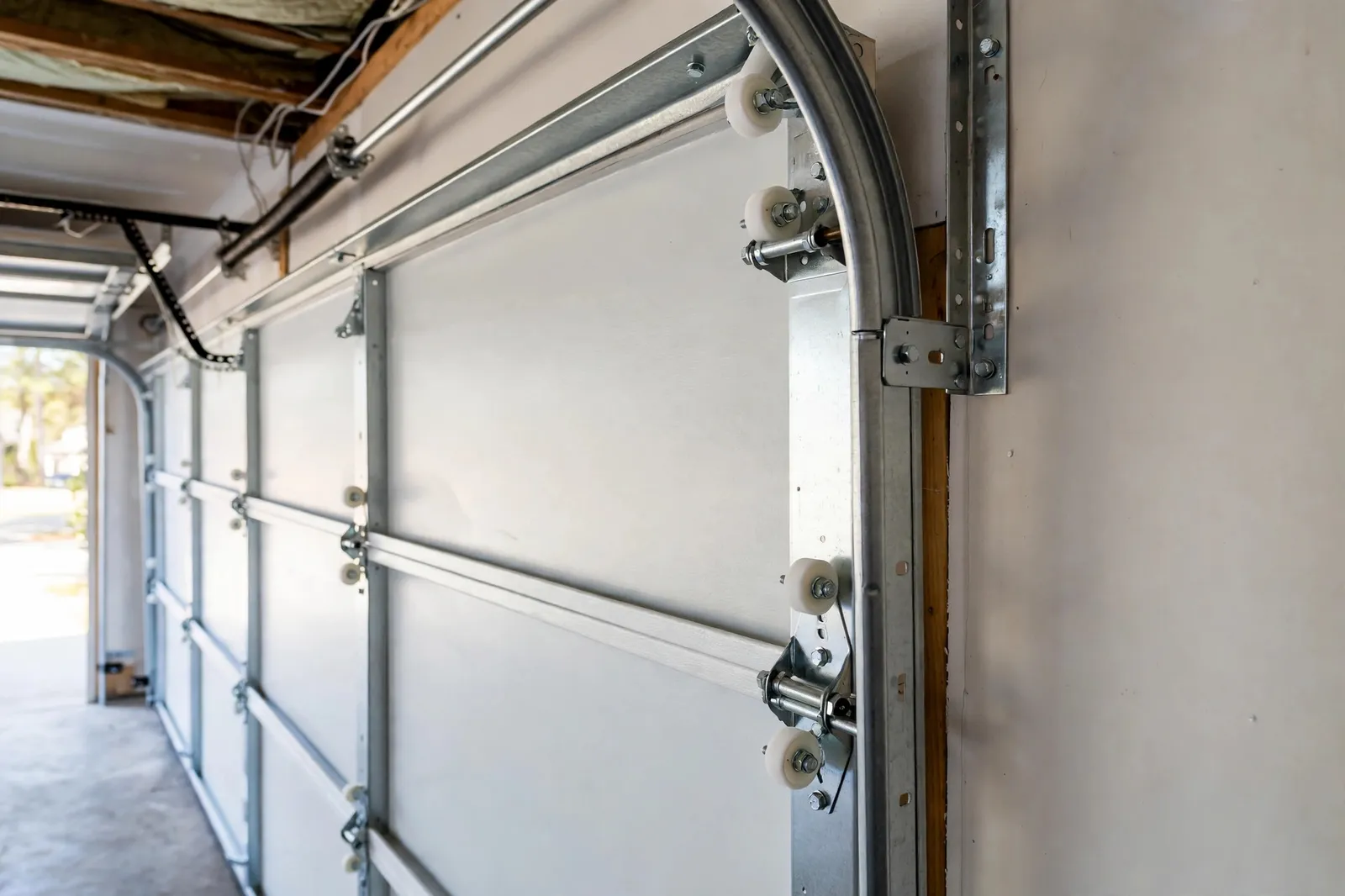
A standard two-car door carries ten rollers, one at each side of every section, and each roller rides in the track as the door travels. The wheel turns on a bearing, and the stem sits in a hinge bracket that lets the section flex through the curve.
Wear shows up in stages. Bearings dry out and get gritty, then loose, so the wheel wobbles instead of tracking true. Steel wheels develop flat spots where they skid rather than roll. Plastic wheels on builder-grade doors crack and chunk. Once a wheel wobbles, the section it carries starts to bind, and the noise homeowners notice is metal meeting the track at the wrong angle.
Steel rollers are the traditional choice and suit heavy doors well, but they are the loudest option and their bearings are often open to dust. Nylon rollers run far quieter, and the better ones carry sealed bearings, which keep grit out and spread the load. For a garage under a bedroom or beside a living room, the difference is not subtle.
A heavy insulated or wood door may call for steel stems and wheels rated for the weight, while a standard steel door usually rides best on nylon with sealed bearings. Stem length and wheel diameter also have to match the track, or the new rollers bind from the first trip.
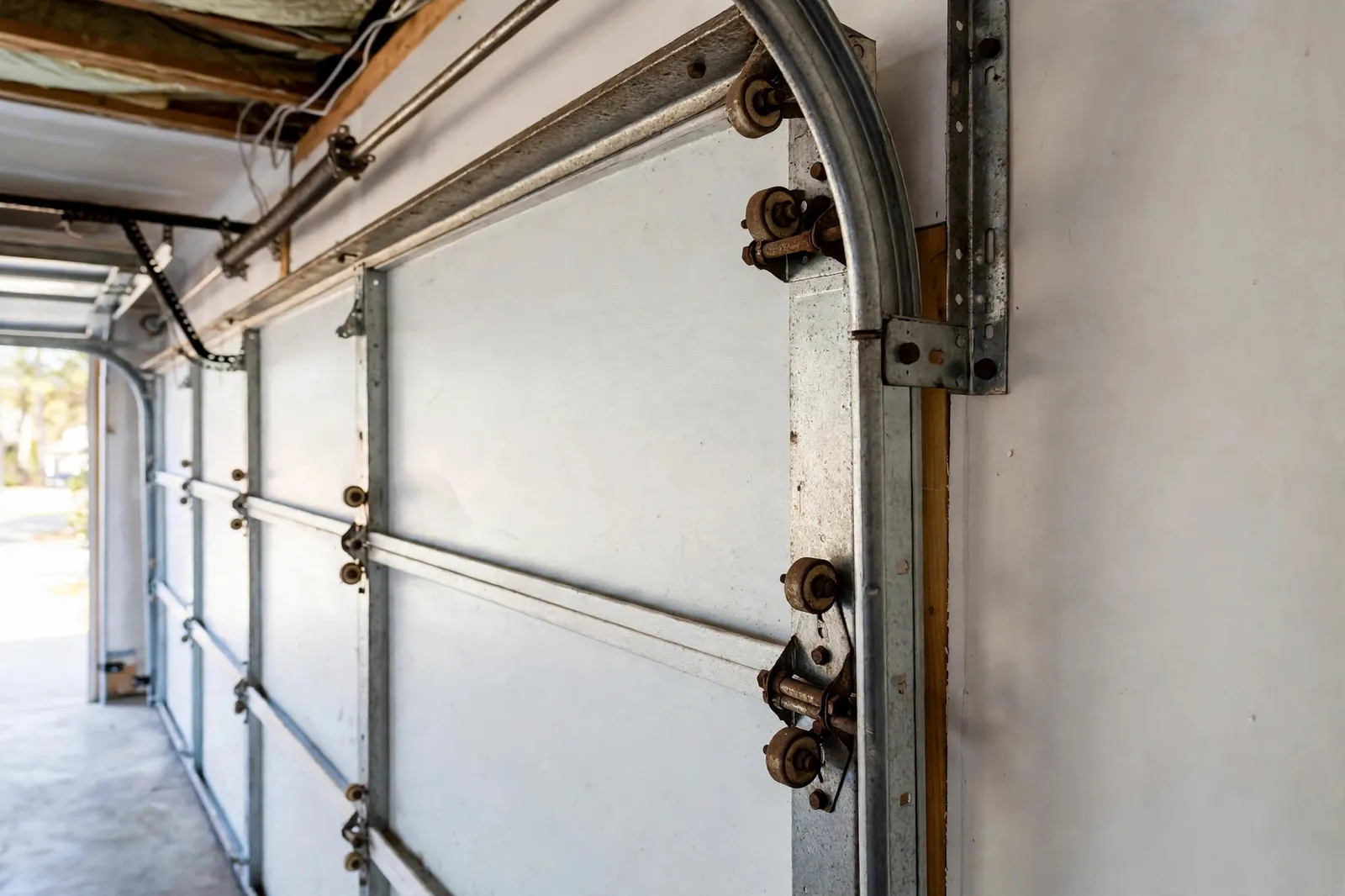
A Sheffield homeowner had stopped using the opener because the door shook hard enough to rattle tools off the garage wall. Inspection found flat spots on most of the original steel rollers and two wheels loose in their stems. We replaced all ten with nylon rollers on sealed bearings, cleaned and checked both tracks, and balanced the door.
No Waldorf company publishes a local price list for this work, so this page publishes the national ranges openly and labels them as national figures. A diagnostic service call runs $75 to $150 nationally, drawn from Housecall Pro's aggregated 2026 table, and roller work sits in the same general repair family as cable replacement, which runs $150 to $350 nationally. The total turns on the count, since a two-car door takes ten, and on the roller type the door's weight calls for. The Sheffield project above, all ten rollers replaced with sealed-bearing nylon, came to $248.
Describe where the noise lives. Rumbling at the curve, clunking at one height, and shaking near the floor point at different rollers, and your description narrows the inspection. On site, we check every roller, both tracks, and the hinges that hold the stems, then state the price for the set before work begins.
A standard two-car door has ten, one at each side of each of its five sections. Single doors usually carry six or eight. Every roller makes the same trips, which is why they wear out as a set rather than one at a time.
Look for a wheel that wobbles on its stem, flat spots on the tread, cracks in plastic wheels, and black metal dust along the track. A gritty, resistant feel when the wheel is spun by hand means the bearing is worn.
Nylon with sealed bearings is the quieter, longer-wearing choice for most standard doors, and the usual pick for garages under living space. Steel suits the heaviest doors. The deciding factors are door weight and track fit.
Published national figures put a diagnostic service call at $75 to $150, and totals depend on roller count and type. The recent Sheffield job, all ten rollers replaced with sealed-bearing nylon, came to $248.
You can, but it rarely stays a one-roller story. The other rollers have made the same trips and are close behind. Because the door is restrained once for the work, a full set costs little more in labor than a single swap.
The form at the bottom of this page asks for your name, phone number, the service you need, and a short message. A line about where the noise happens, or rollers you can see wobbling, helps us plan the visit. There is no obligation attached to asking.
Tell us what the door is doing, or not doing. We read every request that comes in and respond with the published national range for that kind of work and the next step, starting with a visit to inspect the full system on site.
Prefer to talk it through first? Send the form and we will call you back at the number you give us.