Waldorf, Maryland
Garage Door Sensor Repair in Waldorf, MD
Garage Door Sensor Repair in Waldorf, Maryland, with the published national price range up front, the full system inspected on site, and the price stated before any work begins.
Waldorf, Maryland
Garage Door Sensor Repair in Waldorf, Maryland, with the published national price range up front, the full system inspected on site, and the price stated before any work begins.
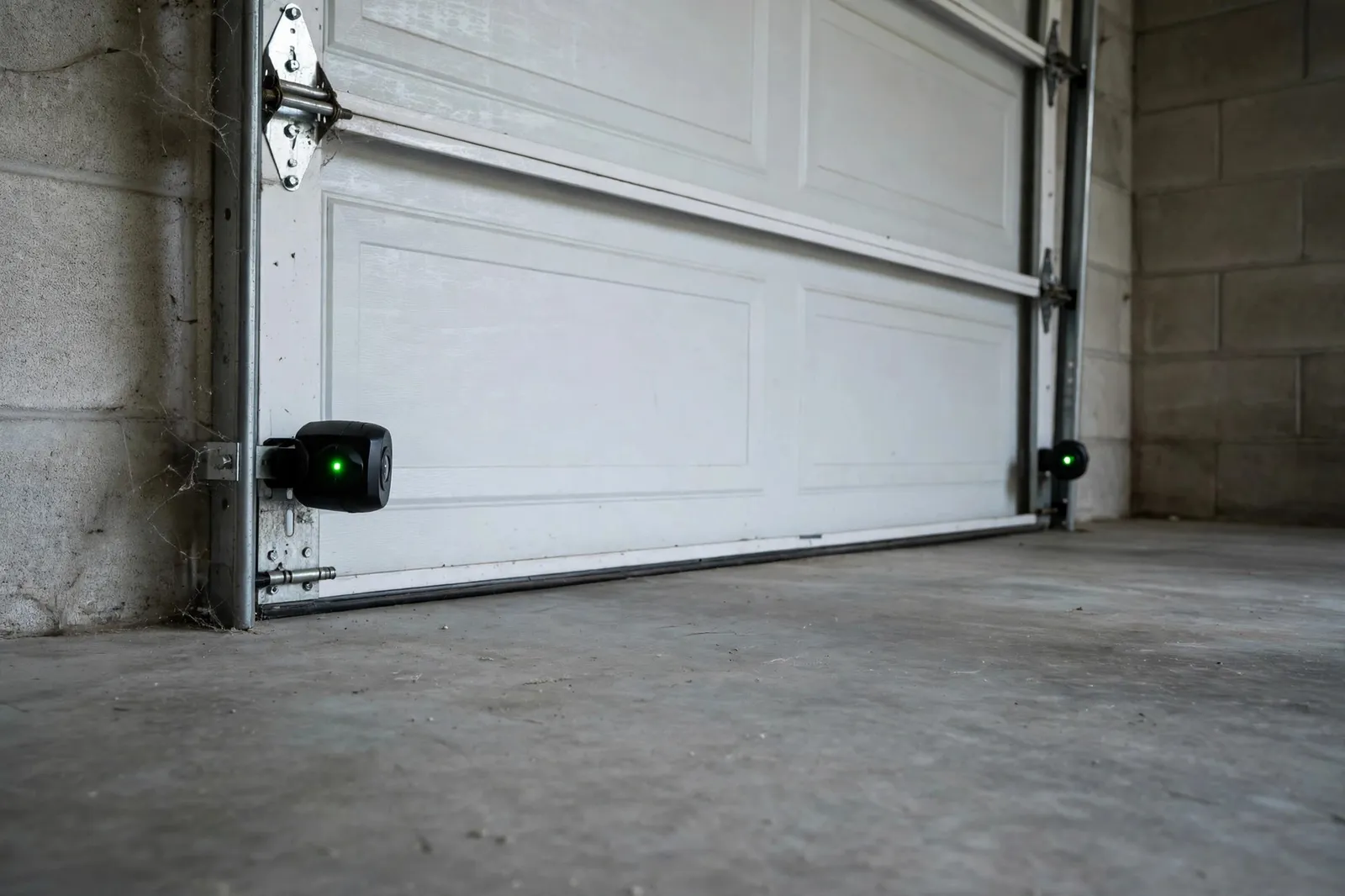
The door starts down, gets a few inches, and pops right back up while the opener light blinks at you. That routine is the safety sensors doing their job, or thinking they are. The photo-eye sensors at the base of your tracks are the one part designed to stop the door, and when they misread the opening, the door will not close for anyone. We diagnose and repair garage door sensors across Waldorf.
Misalignment leads the list. The eyes sit low on the tracks, at the height of brooms, trash cans, and bumpers, and a nudge nobody remembers can point one away from its partner. The opener reads the broken beam as a child or pet in the doorway and reverses, exactly as it should.
Dirt and light cause quieter failures. Dust and pollen film the lenses through a Charles County spring and dim the beam until it drops out in bright sun, why some doors refuse to close only on sunny afternoons. Wiring fails too: thin wires get nicked by trimmers, pinched by tools, or corroded where condensation settles, and a wire hanging by two strands gives a door that works Tuesday and reverses Wednesday. Sometimes the fault sits in the opener's circuit board, a different repair the diagnosis separates out.
One point for every homeowner: these sensors stop a closing door from coming down on a person. Never tape the eyes together or disconnect them to force a close. A door that will not close is an annoyance; one that closes blind is a hazard.
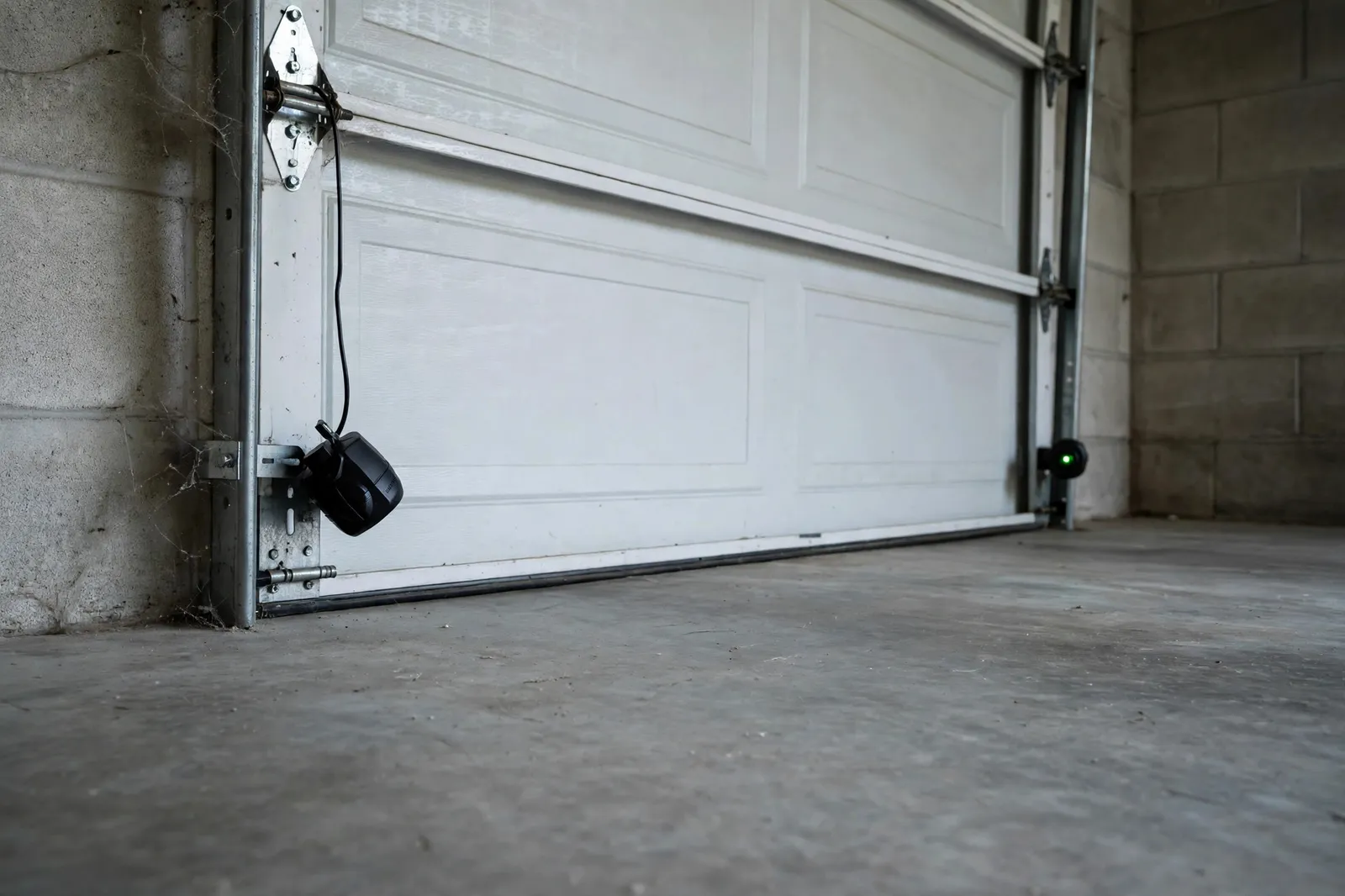
A Carrington door reversed three mornings out of five and closed fine the other two. Two small faults were stacked: one sensor knocked off line by a recycling bin, and its wire nicked and corroded along the track base. We replaced the wire run, trued both eyes, cleaned the lenses, and tested the reversal until it responded the same every time.
No Waldorf company publishes a local price list for this work, so plan from the published national ranges, labeled as national. A service call runs $75 to $150 nationally, and most sensor faults are found and fixed inside that kind of visit. When the diagnosis lands on a failed opener circuit board instead, the national figure becomes opener replacement at $300 to $800 (Housecall Pro 2026). The quote form below gets your figure.
We start with the indicator lights on the eyes, which show whether each has power and whether the pair sees each other. Then we check alignment, clean the lenses, and trace the wiring inch by inch for nicks and corrosion, because intermittent faults almost always live in the wire.
If eyes and wiring pass, we test the opener's sensor circuit, logic board, and the travel and force settings that can mimic a sensor fault. The visit ends with the door closing fully, then reversing promptly off an obstruction in its path, repeated until it behaves the same every time.
The opener believes something stands in the doorway: the beam between the eyes is broken, misaligned, dirty, or losing power through damaged wiring, or the door binds and the opener reads resistance as an obstruction. The fix is a diagnosis, not more closing force.
Most sensor problems are fixed within a diagnostic visit, and a service call runs $75 to $150 nationally. A sensor pair or wiring run adds modest parts. If the fault is the opener's circuit board, replacement runs $300 to $800. Send the quote form for your number.
Holding the wall button overrides the sensors on most openers, so a door can be closed under watch while a fault is sorted out. Treat it as temporary, watch the doorway the whole way down, and never close it that way from outside the garage.
Glare. Low sun shining into the receiving eye can wash out the beam, and the door behaves as if the beam is broken. Shading the eye sometimes cures it. A sun-only pattern is worth noting in the quote form message.
Gently, with a soft dry cloth; gritty wiping scratches the small plastic lenses into a permanently dim beam. Check both eyes sit snug in their brackets and the indicator lights are lit. If cleaning does not restore the door, the fault is deeper.
On most openers, that pattern reports a sensor problem: a blocked beam, a misaligned pair, or a wiring fault. It is the opener telling you where to look first. Note it in the quote form message; it shortens the diagnosis.
Tell us what the door is doing, or not doing. We read every request that comes in and respond with the published national range for that kind of work and the next step, starting with a visit to inspect the full system on site.
Prefer to talk it through first? Send the form and we will call you back at the number you give us.