Waldorf, Maryland
Weather Seals and Insulation in Waldorf, MD
Weather Seals and Insulation in Waldorf, Maryland, with the published national price range up front, the full system inspected on site, and the price stated before any work begins.
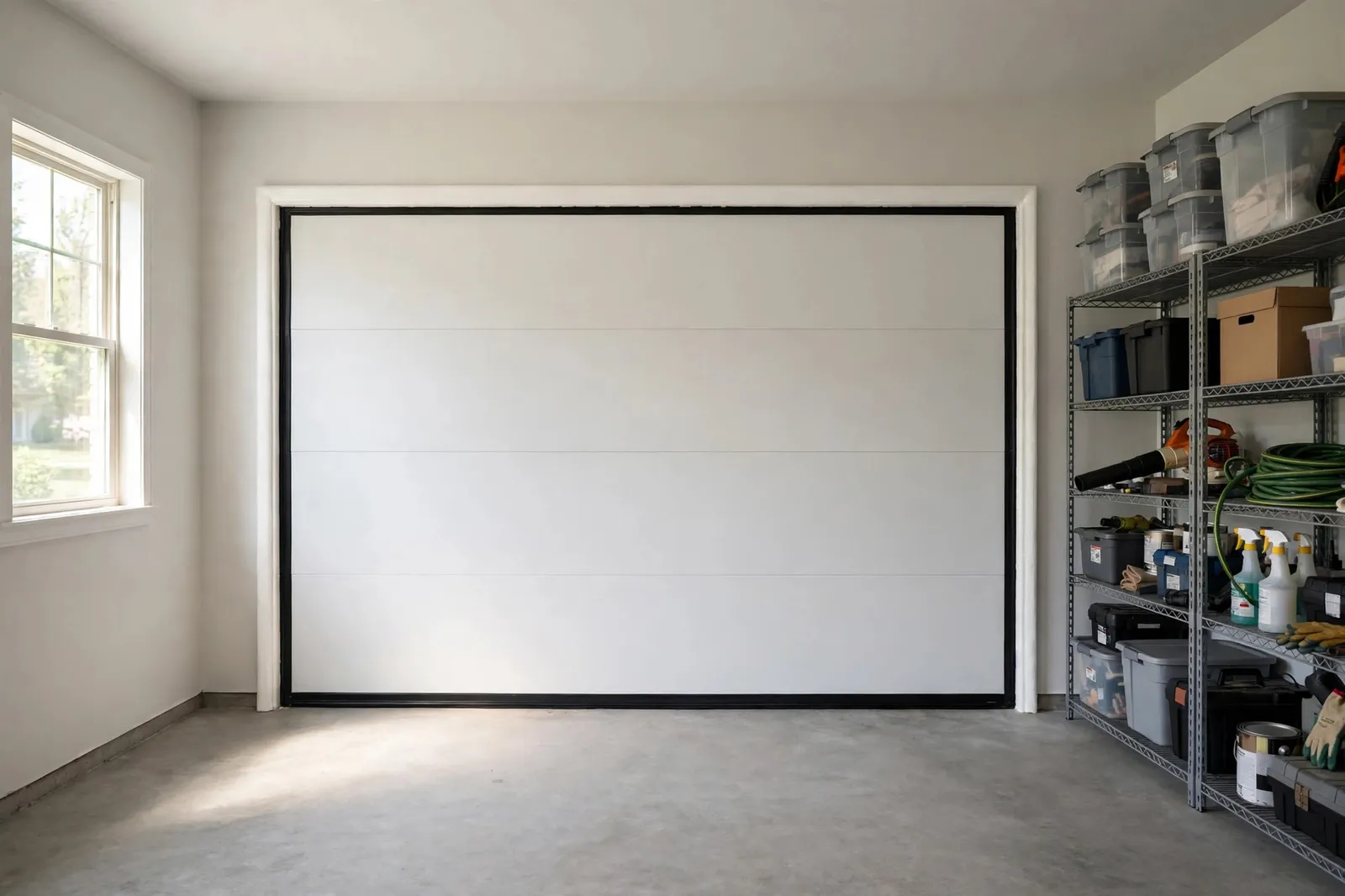
Waldorf, Maryland
Weather Seals and Insulation in Waldorf, Maryland, with the published national price range up front, the full system inspected on site, and the price stated before any work begins.
Stand in a Waldorf garage on a windy January night and you can feel the cold finding its way in through gaps where rubber used to sit tight. Weather seals wear out quietly: the bottom seal flattens and cracks, the side strips pull away from the frame, and the garage starts letting in wind, rain, dust, and mice. We replace worn seals and add insulation so the door closes the opening properly again.
A closed garage door is only as weather tight as the soft parts around it. The bottom seal does the hardest work, pressing against the floor against water, wind, and pests, taking sun, cold, and the door's weight daily. Side and top weatherstripping closes the frame gaps.
Daylight is the honest test: if you can see light under or around a closed door, air and water have a path too. The floor tells it too: leaves and grit inside the door, puddles after a hard rain.
We start by removing the old material and cleaning the surfaces it sat on, since new seals fail early over dirt and peeling paint. The bottom seal fastens into the retainer at the base of the door, and when the retainer is bent or rusted, we replace that too.
Insulation is the other half of the job for doors that are sound but hollow. Foam panels cut to fit each section add warmth, quiet, and stiffness. A door that is rusting or cracked is a different conversation, and we will say so rather than seal a door near the end of its life.
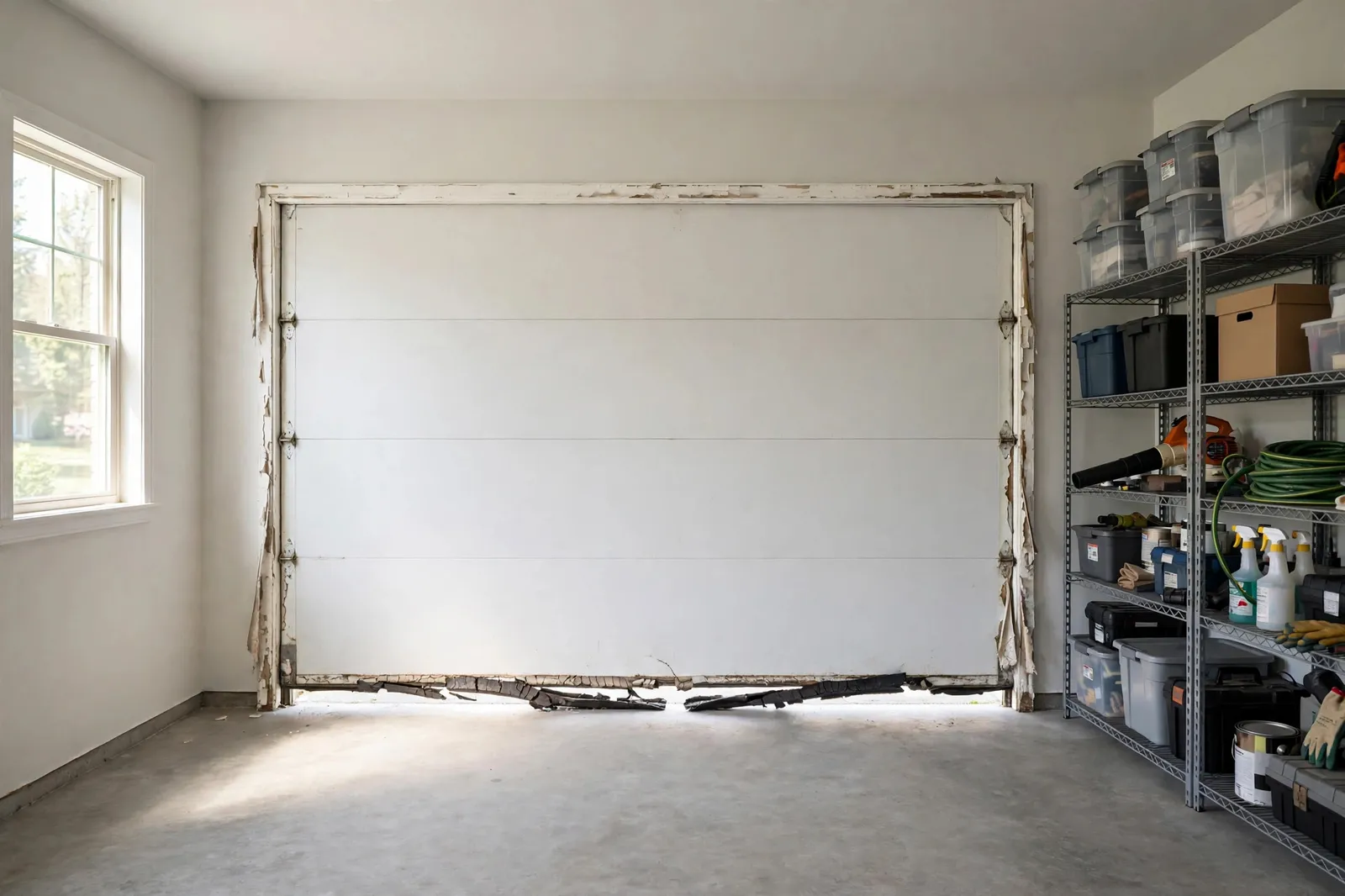
A two car door in Pinefield had a bottom seal split in two places and side strips curled away from the frame, and rain was pooling just inside the door after storms. We replaced the bottom seal and its retainer, fitted new side and top weatherstripping, and added a floor threshold where the slab had settled, then checked the closed door for light gaps.
No Waldorf company publishes a local price list for this work, so the figures here are published national ranges, labeled as exactly that. A service call runs $75 to $150 nationally, and seal work is priced once we have seen the door. The finished Pinefield job on this page came to $215 for the full set of seals and threshold. When the door itself is the real problem, full door replacement runs $754 to $1,707 nationally, and we will tell you if yours has reached that point.
Every visit starts with the door closed and the lights off, because light shows the gaps better than guessing. We check the bottom seal, the frame strips, the slab, and the sections, then talk through what we found before any material comes off. The work is simple but not sloppy: clean surfaces, the right seal profile for your door, and a final closed-door check.
A full set of seals is priced after we see the door; published national figures put a service call at $75 to $150, and the completed two car job on this page came to $215, all seals and threshold included. Your number depends on door size and frame condition.
Look for daylight under or around the closed door, rubber that is cracked or pulling away, and water or grit collecting just inside the door. A garage nearly as cold as the outdoors in winter tells you the same thing.
Seals close the gaps mice and insects use most, especially along the bottom of the door. Gaps elsewhere, vents and wall penetrations, are separate paths, but the door is the one we can close for you.
Bottom seals and frame strips are within reach of a careful homeowner with basic tools. Work on the seals only, and stay clear of the springs and cables, which hold the door's weight under tension. A damaged retainer or a shifted slab makes the fit harder to get right.
If the sections are sound, insulation panels fitted to your current door add warmth and quiet for far less than a replacement. If the door is rusting through or warped, the money belongs toward a new door. We will give you our honest read after seeing it.
Seal life depends on sun exposure and how much use the door sees; the bottom seal works hardest and wears first. Checking the seals once a year catches splits and gaps before water starts coming in again.
Tell us what the door is doing, or not doing. We read every request that comes in and respond with the published national range for that kind of work and the next step, starting with a visit to inspect the full system on site.
Prefer to talk it through first? Send the form and we will call you back at the number you give us.